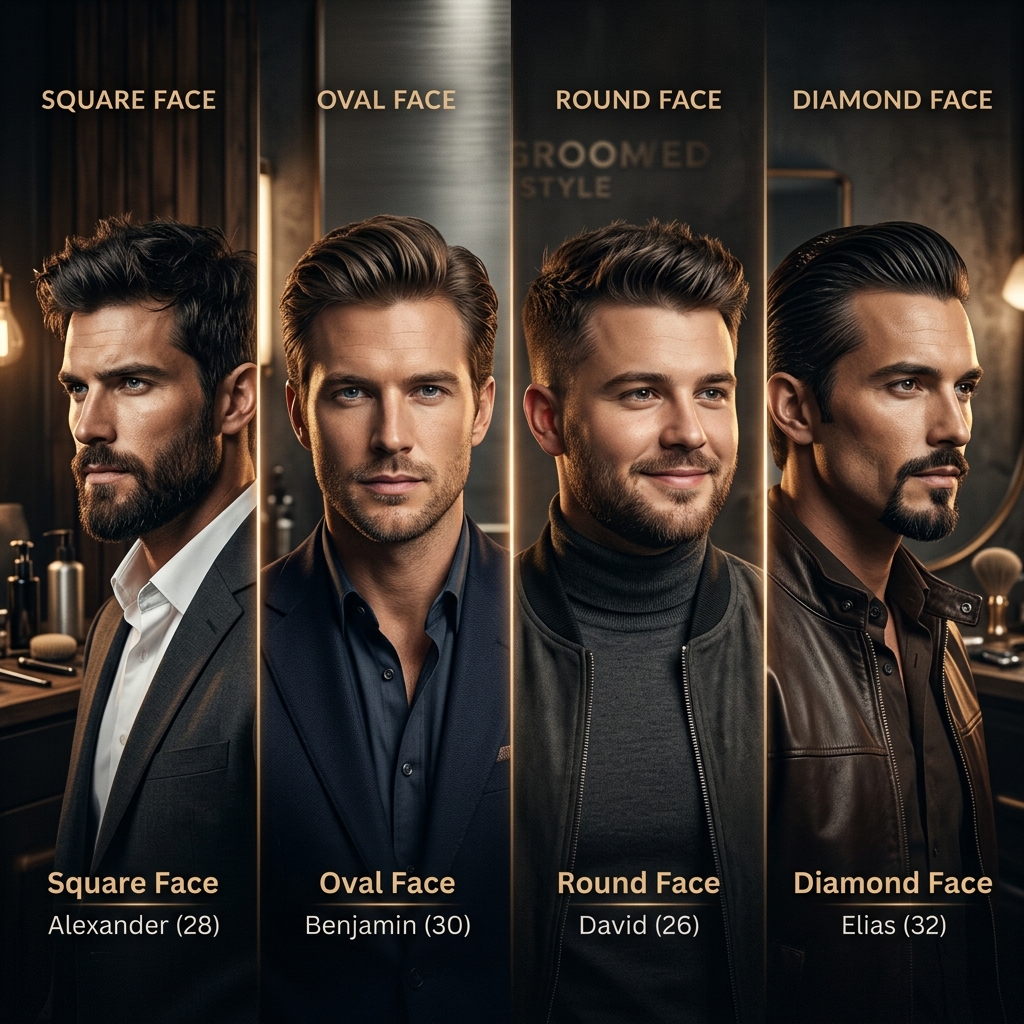
The Ultimate Guide: Which Face Shape Suits Circular Glasses?
Welcome to the definitive resource for styling circular glasses. Discover exactly which face shapes benefit from round frames, learn the science of contrasting facial proportions, and unlock professional secrets to rocking vintage eyewear.
Few eyewear styles carry as much historical weight, artistic flair, and intellectual charm as circular glasses. From the iconic John Lennon glasses of the 1960s to the minimalist frames favored by Steve Jobs, and the pop-culture phenomenon of Harry Potter glasses, perfectly round frames have never truly gone out of style. However, because they are so geometrically distinct, they do not suit everyone equally. Finding the right fit is a masterful exercise in face shape analysis.
The Golden Rule: Contrasting Geometry
In the world of optics and styling, there is one universal, unbreakable law when selecting eyewear: The Rule of Contrast. To find the most flattering glasses, you must choose a frame shape that is the exact geometric opposite of your natural bone structure.
If you wear glasses that perfectly mimic your face, you will exaggerate those features. For example, putting boxy, square glasses on a highly square face makes the face look like a rigid block. Therefore, circular glasses are designed to do one primary thing: introduce soft curves and sweeping circular lines to a face that naturally lacks them.
Because round frames consist entirely of curved lines, they are the ultimate styling tool for individuals with strong, sharp, and highly defined angular features.
The Square Face: A Perfect Match
If you have a square face shape, you have hit the absolute jackpot for circular glasses. In fact, round frames are widely considered the single best eyewear choice for this specific bone structure.
Why It Works:
A square face is characterized by a broad forehead, wide cheekbones, and a very prominent, sharp square jaw. The width and length of the face are roughly equal, creating a strong, boxy silhouette. When you introduce round glasses to this landscape, the sweeping circular curves of the lenses brilliantly counteract the harsh, straight lines of the jawline and forehead. The glasses act as a softening agent, making the face look more approachable, balanced, and organically harmonious.
Styling Tips for Square Faces:
Ensure the frames are wide enough. The circular glasses should extend slightly past your cheekbones to make your face appear slimmer.
Thin wireframe glasses offer a sleek, intellectual look, while thicker acetate frames can make a bold, trendy fashion statement.
The Rectangle Face: Softening Length
Similar to the square face, the rectangle face (also known as an oblong face with sharp angles) is an exceptional candidate for round frames. This shape shares the sharp jawline of a square face but features significantly more vertical length.
Why It Works:
Individuals with a rectangle face shape have statuesque, elongated facial proportions. Because circular glasses naturally draw the viewer's eye outward to the sides (horizontal focus) rather than up and down, they beautifully break up the excessive length of the face. Furthermore, the roundness of the lenses softens the sharp corners of the rectangular jaw, bringing a gentle equilibrium to a very powerful, commanding bone structure.
Styling Tips for Rectangle Faces:
Don't be afraid to go big. Oversized round glasses work wonders here because your face has the length to accommodate large lenses without being swallowed by them.
Look for frames with a thicker bridge or detailing on the outer edges to further draw the eye horizontally.
The Diamond Face: Highlighting Cheekbones
The diamond face shape is the rarest of all face shapes. It is defined by a narrow forehead, a narrow, pointed chin, and dramatically wide, high, and prominent cheekbones.
Why It Works:
Because the cheekbones are so wide and the forehead/chin are so narrow, the goal is to draw attention to the eyes and soften the striking angles of the cheeks. Circular glasses are highly effective here because the soft curves of the round lenses contrast beautifully with the sharp points of the diamond geometry. The roundness brings a gentle, artistic softness to the center of the face.
Styling Tips for Diamond Faces:
Size is critical. The frames must not be wider than your cheekbones. If they extend too far past your cheeks, they will exaggerate the narrowness of your forehead and chin.
Delicate metal frames or semi-rimless round styles work incredibly well, ensuring the glasses do not overpower your striking natural features.
Heart & Oval Faces: Versatile Styling
While angular faces benefit the most from the contrast of circular glasses, both heart and oval face shapes can also wear them with fantastic results, provided they choose the right specific style.
The Heart Face Shape
A heart face shape features a wide forehead that sharply tapers down to a narrow, pointed chin. Round frames are excellent for this shape because they draw attention downward and away from the broad forehead. The soft curves of the bottom half of the circular lens naturally complement the sharp point of the chin. Tip: Choose thin, light-colored frames so you don't add heavy visual weight to the top half of your face.
The Oval Face Shape
The oval face is the universal standard in optics. Because the proportions are perfectly balanced (slightly longer than wide, with a softly curved jaw), an oval face can wear almost any frame shape. Round glasses look incredible on an oval face, leaning heavily into a chic, bohemian, or intellectual vintage eyewear aesthetic. Because you don't need to "correct" any sharp angles, you have total freedom with frame thickness and color.
Can a Round Face Wear Round Glasses?
According to traditional face shape analysis, individuals with a round face shape (full cheeks, soft jaw, equal width and length) should strictly avoid circular glasses. The rule of contrast dictates that placing round circles on a round canvas will simply exaggerate the roundness, making the face look wider, softer, and more spherical.
How to Break the Rules:
If you have a round face but absolutely love the John Lennon glasses aesthetic, you *can* break the rules, but you must do so strategically:
Go Oversized: Tiny, perfectly round glasses will emphasize the fullness of your cheeks. However, massive, oversized frames (large circles) will make your face look smaller by comparison.
Choose Ultra-Thin Wire: Avoid thick, heavy black acetate frames. Instead, choose razor-thin gold or silver metal frames. The invisibility of the wire ensures the circular geometry isn't harshly drawn onto your face.
Look for a High Bridge: A keyhole bridge or a high nose bridge will draw the eye upward, adding a subtle illusion of length to your circular face.
Choosing Frame Thickness and Material
The material of your circular glasses dramatically changes the vibe they project, regardless of your face shape.
Thick Acetate (Plastic) Frames
Thick, bold, perfectly round acetate frames (especially in black or tortoiseshell) are a massive fashion statement. They scream architect, artist, or designer. These are best suited for square faces or rectangle faces with very strong jawlines that can support the heavy visual weight of the plastic without being overpowered.
Thin Metal (Wireframe) Glasses
Thin wireframe glasses in gold, silver, or gunmetal evoke the classic Harry Potter glasses or 1970s intellectual aesthetic. Because they are delicate, they are exceptionally flattering on diamond faces and heart faces, as they don't distract from the natural bone structure. They are subtle, sophisticated, and incredibly lightweight.
The Circular Glasses Cheat Sheet
Face Shape
Suitability
Expert Recommendations for Round Frames
Square Face
Perfect Match
The absolute best shape for round glasses. The curves beautifully soften a harsh square jaw and broad forehead.
Rectangle Face
Highly Recommended
Excellent for breaking up vertical length. Opt for slightly larger frames to balance the elongated proportions.
Diamond Face
Great Choice
Softens sharp cheekbones and a narrow chin. Keep frames delicate (wire) and ensure they aren't wider than the cheeks.
Heart Face
Good Fit
Draws attention away from a wide forehead. Opt for light-colored or thin frames to avoid top-heavy visual weight.
Oval Face
Versatile / Excellent
Can wear them effortlessly due to balanced facial symmetry. Great for achieving a trendy, vintage eyewear look.
Round Face
Proceed with Caution
Generally avoid, as round-on-round exaggerates width. If you must, choose ultra-thin metal frames in an oversized fit.
Conclusion: Embrace the Curve
Circular glasses are far more than just a tool to correct your vision; they are a profound style statement steeped in cultural history. By understanding the geometric relationship between your bone structure and your eyewear, you can use these iconic frames to your massive advantage.
If you possess sharp angular features, a striking square jaw, or pronounced cheekbones, round frames are your ultimate secret weapon. They will introduce a harmonious, artistic softness to your face, perfectly balancing your strong geometry. Embrace the rule of contrast, experiment with different materials, and confidently rock one of the most timeless looks in optical fashion!
Frequently Asked Questions
10 FAQs
The square face shape is universally considered the best match for perfectly round frames. The sweeping curves of the circular lenses perfectly contrast and soften the harsh, straight lines of a broad forehead and a sharp square jaw.
According to the styling rule of contrast, you should avoid frames that mimic your bone structure. Placing circular frames on a round face shape visually exaggerates the fullness of the cheeks and the lack of angles, making the face look wider and more spherical.
Aesthetically, yes. Both terms refer to perfectly circular glasses made from thin metal wire (known as "teashades" historically). John Lennon glasses often refer to tinted or sunglass versions, while Harry Potter glasses usually refer to clear prescription lenses, but the core geometry is identical.
Yes! Because an oval face has beautifully balanced proportions and is slightly longer than it is wide, it serves as a versatile canvas. Round frames look incredibly chic and intellectual on oval faces without distorting the natural symmetry.
Yes, thick acetate frames in a round shape look fantastic on a rectangle face. The thick plastic adds much-needed horizontal width to balance the extreme vertical length of the face, while the round inner lenses soften the sharp jawline.
Proper sizing is critical. The outer edge of the circular frames should sit flush with the widest part of your face (usually your cheekbones). If the circles are too small, they will make your face look massive. If they extend far past your temples, they will make your eyes look cross-eyed.
Circular glasses are highly androgynous and universally unisex. Their appeal relies entirely on face shape analysis rather than gender. They offer a rugged, artistic, intellectual look for men, and a chic, sophisticated, vintage aesthetic for women.
They generally provide a youthful, quirky, and highly stylized aesthetic. Because they are strongly associated with pop culture icons and vintage eyewear trends, they tend to make the wearer look creative, modern, and fashion-forward rather than purely "older."
No. Perfectly round glasses are exact geometric circles. "Panto" (pantoscopic) glasses are a specific subset of vintage frames that are round at the bottom but slightly flattened at the top near the brow line. Panto shapes are generally more forgiving on a wider variety of proportions.
If you have a diamond face shape, it is best to avoid very thick, heavy plastic frames. Because your forehead and chin are narrow, thick frames can overwhelm your delicate features. Instead, opt for thin metal frames or semi-rimless round styles that highlight your cheekbones subtly.
Meet the Founder
Anam Ahsan
SEO Expert & Web Strategist
Passionate about helping people discover their best look through innovative AI technology.
As the visionary behind Detect-FaceShape.com, Anam aims to provide an easy-to-use, highly accurate tool that empowers individuals to confidently choose hairstyles, eyewear, and grooming styles tailored to their unique facial structure.
Latest Articles
Discover tips, guides, and insights about face shapes.