The Heart Face Shape:
Your Complete Style Guide
Everything about the heart face shape — how to identify it, what makes it unique, and the best hairstyles, glasses, makeup, and styling choices for this beautiful and distinctive shape.
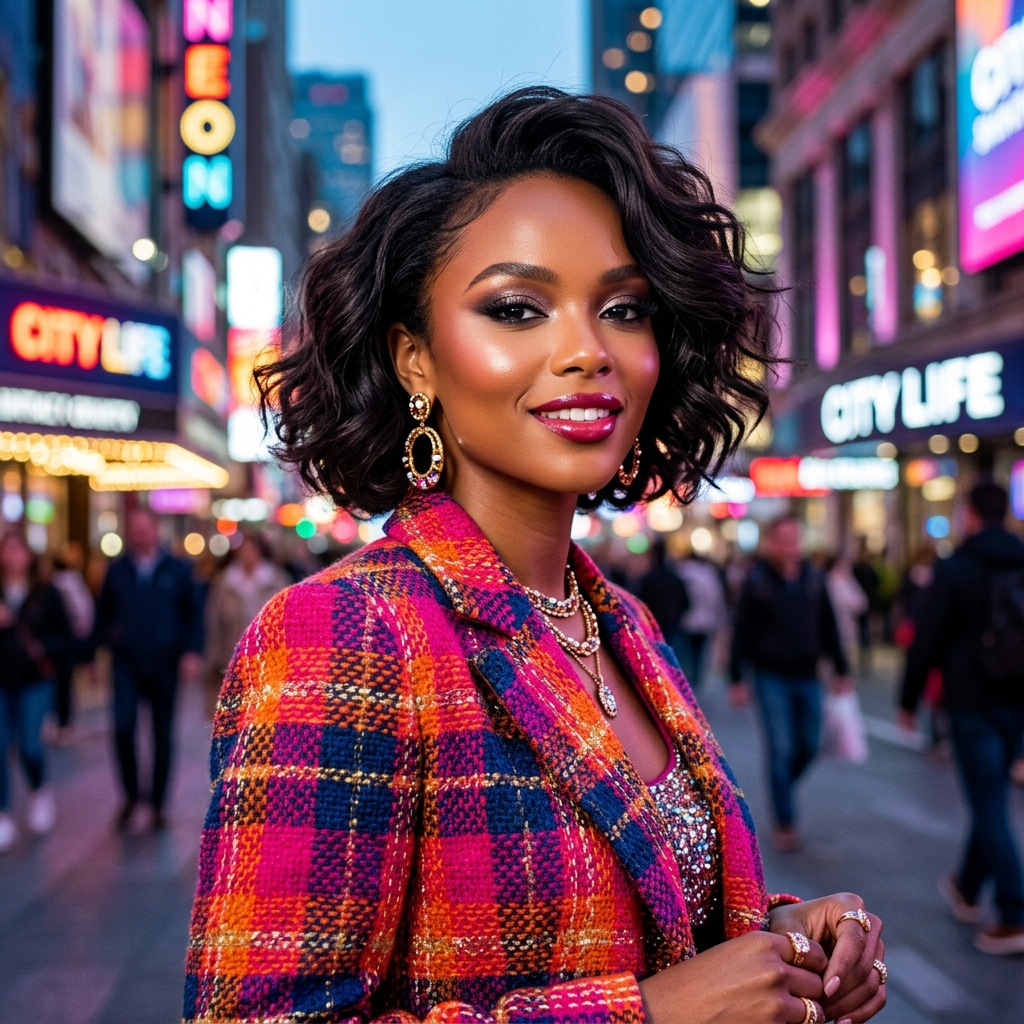
Best Styles for the Heart Face Shape
Tap any style to see why it works for heart face proportions
The heart face shape — wide forehead tapering down to a delicate, narrow chin — is one of the most immediately recognisable and distinctly beautiful face shapes. It has been considered a mark of feminine grace for centuries, and several of the most photographed and celebrated faces in the world are heart-shaped. But styling a heart face well does require understanding a single core principle: balance the wide top by drawing visual attention downward. Once you understand that, every hairstyle, glasses frame, and makeup decision becomes straightforward.
Unlike oval faces — which offer total styling freedom — the heart-shaped face has a clear proportional characteristic that should guide every styling decision: the upper face is significantly wider than the lower face. The forehead is the widest point, the cheekbones may also be broad, and the face narrows progressively to a pointed or narrow chin. The job of every hairstyle, glasses frame, and contour technique is to create the visual impression of a more balanced, evenly-proportioned face by emphasising the jaw and chin while softening the prominent forehead.
What Is the Heart Face Shape?
The heart face shape takes its name from the playing card suit — and it's an apt description. Like the heart symbol, this face shape is widest at the top and tapers to a point (or narrow rounded end) at the bottom. The hairline often features a widow's peak — a natural V-shaped point of hair growth at the centre of the forehead — which is one of the most reliable visual markers of a heart-shaped face.
Wide Forehead
The forehead is the widest point of the face — broader than the cheekbones and significantly broader than the jaw.
High Cheekbones
Prominent, well-defined cheekbones sit just below the wide forehead — often slightly narrower than the forehead itself.
Narrow Jaw & Chin
The jaw is narrow and the chin tapers to a narrow, often slightly pointed end — the defining lower characteristic.
Widow's Peak
A V-shaped natural hairline point at the centre of the forehead — not universal but strongly associated with heart faces.
How to Know If You Have a Heart Face Shape
Pull all your hair back so your complete face outline — from hairline to chin, and temple to temple — is fully visible. Then assess the following:
- ✅ Your forehead is the widest point of your face — measurably broader than both your cheekbones and jaw
- ✅ Your cheekbones are prominent and high — sitting just below the wide forehead, possibly only slightly narrower than the forehead
- ✅ Your jaw is noticeably narrower than both the forehead and cheekbones
- ✅ Your chin is narrow and pointed — or at least significantly narrower than the upper face
- ✅ You may have a widow's peak — a natural V-shaped point at the centre of your hairline (not universal but strongly associated)
- ✅ The overall outline narrows progressively from forehead to chin — like an inverted triangle with a rounded top
- ❌ Your forehead is not the same width as your cheekbones — if the cheekbones are the widest point with a narrow forehead above, you likely have a diamond face
- ❌ Your face does not have roughly equal width at the forehead, cheekbones, and jaw — if all three are similar, you likely have a square or oval face
Measurement Test for Heart Face Shape
- 1Measure your forehead width (F). Across the forehead at its broadest point — usually about one centimetre above the eyebrows. This should be your largest measurement.
- 2Measure your cheekbone width (C). From the outer point of one cheekbone to the other. Should be slightly less than F for a heart face — typically similar or just narrower.
- 3Measure your jaw width (J). From the angle of one jaw to the other. Should be significantly narrower than both F and C.
- 4Check for the widow's peak. Look at your natural hairline — does it form a V-shape or gentle point at the centre of your forehead? This is optional for confirmation but strongly associated with the heart shape.
- 5Heart confirmation: F is your largest measurement. C is slightly smaller than F. J is significantly smaller than both. Face narrows from top to bottom. If this matches — you have a heart face shape.
Best Hairstyles for Heart Face Shape (Women)
For women with a heart face shape, the styling goal is consistent: reduce visual emphasis on the wide forehead and add volume at the jaw and chin level. Hairstyles that achieve this create the impression of a balanced, evenly proportioned face where neither the top nor the bottom dominates.
- Chin-length bob with volume at ends — the single most recommended style for heart faces. Ends that flare or have volume add width exactly where the heart face is narrowest — at the jaw
- Side-swept bangs — covering part of the wide forehead with a diagonal fringe immediately reduces its apparent width and creates a flattering asymmetry
- Lob (long bob) with layers and texture — a collarbone-to-shoulder-length bob that gains volume and texture toward the ends balances the heart beautifully
- Curtain bangs — the soft, parted fringe breaks up the wide forehead without covering it fully, creating a subtle, flattering frame
- Wispy fringe — light, individual strands across the forehead reduce its visual dominance without adding heavy bang weight
- Medium layers gaining volume below the ears — layers that widen from the cheekbones downward add volume precisely where a heart face needs it
- Waves and texture below the jaw — textured waves that expand below the chin add visual breadth to the narrowest zone
- High, voluminous updos — add significant height and visual weight to the already top-heavy upper face
- Heavy, full blunt bangs — cut the face horizontally across the widest point, drawing maximum attention to the forehead's full width
- Very short pixie cuts with no jaw volume — leave the wide forehead unbalanced with no lower-face counterweight
- Very sleek, flat styles without movement — no texture or volume at jaw level means nothing to counterbalance the wide top
- Slicked-back styles — pull all hair away from the forehead, fully exposing its width with no softening frame
- Tight centre-parted styles with no fringe — show the full width of the forehead with a dividing line that draws attention straight up the face
Avoid: High updos add height to the already wide forehead
Best: chin-length bob with flared ends adds jaw-level width
Best Hairstyles for Heart Face Shape (Men)
Men with a heart face shape often have a naturally striking appearance — the strong, wide forehead and prominent cheekbones give a powerful, photogenic quality. The styling goal remains the same: soften or minimise the wide forehead while ensuring the lower face has enough visual presence to create balance.
- Side part — the diagonal part line creates asymmetry that reduces the apparent width of the forehead
- Textured crop with side volume — texture at the sides (rather than height at the top) adds width at cheekbone level without adding more to the forehead
- Undercut or fade with kept-length top — shorter sides frame the jaw while the longer top is styled to the side rather than upward, keeping volume away from the forehead
- Fringe swept to one side — a side-swept fringe covers part of the wide forehead and creates a strong diagonal that visually narrows it
- Medium length with side movement — hair that moves to the sides at the ears and jaw adds width at the lower face
- Very high-volume pompadours or quiffs — add height and visual weight to the already prominent forehead zone
- Slicked-back styles — expose the full width of the wide forehead completely
- Very short buzz cuts — leave the wide forehead prominently exposed with no framing element
- Styles with all volume at the top — increase the top-heaviness of the heart face proportions
Best Glasses Frames for Heart Face Shape
Eyeglasses for a heart face shape should minimise visual weight at the top of the frame — where the heart face is already widest — and draw the eye downward toward the jaw. Light, bottom-heavy, or rimless frames are ideal. The frames should also not extend beyond the width of the forehead.
- Rimless or semi-rimless frames — minimal visual weight at the top means no additional emphasis on the wide forehead
- Bottom-heavy frames — frames with more visual weight or detail at the bottom draw the eye downward and balance the heart face
- Light-coloured or clear frames — subtle frames don't add to the forehead's visual prominence
- Round or oval frames — the curved shapes complement the heart face without adding top-heavy elements
- Frames narrower than the forehead — frames that sit within the width of the forehead help reduce its apparent size
- Low-bridge frames — a lower bridge placement draws the eye downward toward the narrower lower face
- Cat-eye frames — the upswept outer corners add visual width at the forehead and temple level, further emphasising the wide top
- Very wide frames extending beyond the forehead — make the widest feature of a heart face appear even wider
- Heavy, dark, top-heavy frames — bold frames with thick top rims draw maximum attention to the forehead
- Decorative top detailing — ornate or heavy design at the top of the frame emphasises the forehead's width
Makeup and Contouring for Heart Face Shape
Makeup for a heart face shape uses the same logic as hairstyling: use shadow to reduce the apparent width of the forehead and highlight to draw attention downward to the narrower jaw and chin. The goal is visual balance — softening the top-heavy proportions without dramatically altering the face's natural character.
Contour Placement for Heart Face
- Temples and sides of the forehead — the most powerful contour placement for a heart face. A contour swept along both sides of the forehead (from the hairline inward) visually reduces the forehead's apparent width. Apply the shadow at the very edges of the forehead and blend upward into the hairline.
- Below the cheekbones (soft) — a light contour below the cheekbones adds definition without significantly narrowing the face further at this zone.
Highlight Placement for Heart Face
- Centre of the chin and jaw — highlighting the chin tip and along the jaw makes the narrowest part of the face appear wider and more defined. This is the most important highlight placement for a heart face.
- Centre of the forehead only — a very narrow highlight only at the very centre of the forehead (not the full width) can be used, but keep it minimal — this is not the zone to make more prominent.
- Under-eye and inner eye corners — brightens the eye area and draws attention to the face's centre rather than its width.
Blush for Heart Face
For a heart face, apply blush in a horizontal sweeping motion across the apples of the cheeks — moving outward and slightly downward toward the ears. Avoid applying blush in a high, lifted motion that draws the eye upward toward the forehead. The goal is to keep visual emphasis at the cheek level or below, not to lift it toward the wide forehead.
Heart Face vs Other Face Shapes: Key Differences
The heart face shape is most commonly confused with two other shapes. Here's how to tell them apart definitively:
Heart vs Diamond Face Shape
The most common confusion. Both have prominent cheekbones and a narrow, pointed chin. The critical difference: a heart face has a wide forehead as its widest point — the forehead is broader than the cheekbones. A diamond face has a narrow forehead — the cheekbones are the widest point, sitting above a clearly narrower forehead. Wide forehead = heart. Narrow forehead = diamond.
Heart vs Oval Face Shape
An oval face also tapers somewhat from cheekbones to jaw, but the proportions are balanced and moderate — no dramatic wide-forehead to narrow-chin contrast. A heart face has a distinctly top-heavy quality that an oval face does not. If your forehead and jaw seem similarly proportioned, you're likely oval. If the forehead dramatically dominates, you're heart.
Heart vs Triangle Face Shape
The triangle face is essentially the inverse of the heart — it widens from a narrow forehead to a broader jaw. A heart face widens from a broad forehead to a narrow chin. If your jaw is broader than your forehead, you're triangle. If your forehead is broader than your jaw, you're heart.
| Feature | Heart | Diamond | Oval | Triangle |
|---|---|---|---|---|
| Widest Point | Forehead | Cheekbones | Cheekbones (slight) | Jaw |
| Forehead | Wide — widest | Narrow | Slightly wider than jaw | Narrow |
| Jaw | Narrow | Narrow | Gently rounded | Wide — widest |
| Chin | Pointed / narrow | Pointed / narrow | Softly rounded | Wide and strong |
| Widow's Peak | Often present | Rare | Rare | Rare |
| Direction | Wide top → narrow bottom | Narrow, wide, narrow | Balanced | Narrow top → wide bottom |
Heart Face Shape Celebrities
Many of the most celebrated and recognisable faces in entertainment have heart-shaped proportions. Studying their consistent styling choices reveals the principles in action:
- Reese Witherspoon — one of the most frequently cited heart face examples. Her consistently chosen chin-length bobs, often with body and movement at the ends, add jaw-level width that balances her wider forehead. She rarely wears heavy blunt bangs or high voluminous updos on red carpets.
- Scarlett Johansson — another widely cited example. Her various bob iterations almost always end with texture or volume at jaw level — precisely the styling principle for a heart face. Her side-parted, asymmetric styles also consistently soften the forehead zone.
- Taylor Swift — often placed at the heart-oval borderline. Her signature curtain bangs (which partially frame but don't fully cover her wide forehead) and her preference for styles that maintain jaw-level volume are consistent with heart-face principles.
- Ryan Gosling (men) — frequently cited as a male heart face example. His consistently chosen side-part styles and textured crops with swept fringes rather than high volume align with the heart-face principle of reducing forehead prominence.
Style Lesson: Notice how heart-faced celebrities consistently avoid two things — high updos and heavy blunt bangs — while consistently choosing styles with jaw-level volume or asymmetric forehead framing. This consistency across multiple stylists and contexts reflects the reliability of face-shape-informed styling.
Heart Face Shape — Complete Style Reference
| Category | Best Choices | Why It Works | Avoid |
|---|---|---|---|
| Hair (Women) | Chin bob with volume, side-swept bangs, lob with texture, curtain bangs | Adds jaw volume, softens forehead | High updos, heavy blunt bangs, slicked-back styles |
| Hair (Men) | Side part, swept fringe, textured crop, undercut with side styling | Reduces forehead prominence, adds jaw presence | High pompadours, slicked-back, buzz cut |
| Glasses | Rimless, oval, bottom-heavy, light coloured, narrow frames | No top-heavy weight on wide forehead | Cat-eye, wide dark frames, heavy top rims |
| Makeup Contour | Temple sides of forehead, soft below cheekbones | Reduces forehead width visually | Heavy forehead highlighting across full width |
| Makeup Highlight | Chin tip, along jaw, inner eye corners | Widens the narrow lower face | Broad temple highlights that extend forehead width |
| Eyebrows | Low, soft rounded arch — moderate thickness | Doesn't add to forehead visual weight | Very high dramatic arches, very thick heavy brows |
| Earrings | Drop earrings, chandelier, long linear styles | Adds length and width at jaw level | Wide studs or hoops that sit at cheekbone level |
| Necklines | V-neck, scoop neck, boat neck — elongate downward | Draws eye downward from wide forehead | High crew necks that frame the wide forehead |
Conclusion: Style Your Heart Face Shape With Confidence
The heart face shape is one of the most classically beautiful facial structures — the wide, high forehead and prominent cheekbones create an instantly recognisable, striking appearance that has been celebrated across centuries of art and culture. The narrow, delicate chin adds a distinctive elegance that sets the heart face apart from every other shape.
Styling a heart face is straightforward once you understand the single guiding principle: balance the top by drawing visual attention downward. A chin-length bob with volume at the ends, a side-swept bang, rimless glasses, and chin-highlighting contour all serve the same purpose — creating the visual impression of a more evenly proportioned face without diminishing the natural beauty of the heart's distinctive structure.
The best styles for your heart face shape work with your natural proportions, not against them. Embrace the wide forehead and striking cheekbones — they're remarkable features. Just give the lower face the visual presence it needs to complete the balance. Not sure you have a heart face shape? Use our AI face shape detector to confirm in seconds.
Frequently Asked Questions
10 FAQsThe heart face shape is characterised by a wide forehead (the widest point of the face), prominent high cheekbones, a narrow jaw, and a pointed or narrow chin. It often features a widow's peak — a V-shaped natural hairline at the centre of the forehead. The overall silhouette narrows progressively from the wide forehead down to the narrow chin, resembling the playing card heart symbol (or more accurately, an inverted triangle with a slightly rounded top). It is widely considered one of the most ethereally beautiful face shapes.
The key distinction is how dramatically your face narrows from top to bottom. An oval face has balanced proportions — the cheekbones are the widest point by only a small margin, and the face tapers gently with no dramatic feature. A heart face has a distinctly top-heavy quality — the forehead is noticeably wider than the cheekbones, and the jaw and chin are significantly narrower than the upper face. If you see a clear, pronounced narrowing from a wide top to a narrow chin, you're heart. If the proportions seem balanced throughout, you're likely oval.
The best hairstyle for a heart face shape is a chin-length bob with volume or texture at the ends — adding visual width at the jaw level, which is the narrowest point and where a heart face most needs it. Side-swept bangs are the second most recommended choice, as they cover part of the wide forehead with a flattering diagonal. Curtain bangs and lobs with textured ends are also excellent. The consistent principle: add volume or width at the jaw and chin, and soften or partially cover the wide forehead.
Yes — the right type of bangs are excellent for a heart face shape. Side-swept bangs and curtain bangs are particularly recommended, as they partially frame and soften the wide forehead without adding horizontal weight across it. Wispy, light fringes also work well. What to avoid: heavy, full blunt bangs that cut across the full width of the forehead — these draw maximum attention to the forehead's width and shorten the face vertically at its widest point.
The best glasses for a heart face shape are rimless or semi-rimless frames (minimal top visual weight), oval or round frames (soft shapes that don't emphasise the forehead), and bottom-heavy frames (more visual weight below draws the eye downward). Light-coloured or clear frames are also ideal. Avoid cat-eye frames — the upswept outer corners add visual width at the forehead and temple level, precisely where a heart face doesn't need more width.
The heart face shape is moderately common — not as common as oval or round faces, but more common than diamond or triangle faces. It appears frequently in the entertainment and modelling industries, partly because the wide forehead and prominent cheekbones are considered highly photogenic features. The widow's peak that often accompanies a heart face is itself relatively uncommon and adds a distinctive character to the shape.
A widow's peak is a natural V-shaped point of hair growth at the centre of the forehead — where the hairline forms a downward point rather than a straight or gently curved line. It is genetically determined and strongly associated with the heart face shape, but not universal. Many people with heart face shapes do not have a widow's peak, and some people with other face shapes do have one. The widow's peak is a useful visual marker for identifying a heart face, but its absence does not rule out the heart shape.
Not at all — short hair can look beautiful on a heart face shape. The key is choosing the right short style. A textured pixie cut with volume at the sides (at ear and jaw level) adds the width that a heart face needs at the lower face. A chin-length bob is also short by many standards and is one of the most recommended styles for heart faces. What to avoid is a very flat, close-cropped style with no side volume — this leaves the wide forehead as the dominant visual feature with nothing to counterbalance it.
For a heart face shape, the primary contour placement is along the sides of the forehead — temple contouring that sweeps from the hairline inward reduces the apparent width of the wide forehead. Apply a matte contour powder at the very edges of the forehead and blend upward into the hairline. Highlight the chin tip and along the jaw to make the narrow lower face appear wider and more substantial. Keep cheek contouring soft — the cheekbones are already well-defined on a heart face.
Widely cited examples of heart face shape celebrities include Reese Witherspoon (one of the most frequently cited examples, with her pronounced widow's peak and wide forehead tapering to a pointed chin), Scarlett Johansson, Taylor Swift (sometimes placed at the heart-oval borderline), and Kourtney Kardashian. Among men, Ryan Gosling and Harry Styles are frequently mentioned as having heart or heart-adjacent proportions. Their consistent styling choices — particularly Reese Witherspoon's signature chin-length bobs — are textbook heart-face styling.