Which Face Shape Do I Have?
The Ultimate Guide to Identifying Your Face Shape
From oval to diamond — discover your unique facial structure and unlock the style choices that were made for you.
Explore All 7 Face Shapes
Hover or tap any shape to see key characteristics
Ever stood in front of a mirror wondering, "Which face shape do I have?" — and ended up more confused than when you started? You're absolutely not alone. Knowing your face shape is one of those foundational beauty secrets that unlocks everything: haircuts, glasses frames, makeup contouring, beard styles, and even jewelry choices. Let's figure it out — once and for all.
Think of your face shape as the canvas you're working with. Just like an artist needs to understand their canvas before picking up a brush, you need to understand your facial structure before making major beauty or style decisions. And here's the truth — every face shape is beautiful. The goal isn't to "fix" anything. It's about understanding your unique features and learning how to complement them perfectly.
In this comprehensive guide, we break down all the major face shapes, show you exactly how to measure your face at home, and give you practical tips for hair, makeup, glasses, and more. Let's dive in.
Why Does Knowing Your Face Shape Even Matter?
You might be thinking — does face shape really matter that much? Honestly, yes — more than most people realize. Your facial structure influences an enormous number of style decisions, from the angle your hairstylist cuts your layers to the glasses frame shape that looks best on you at the eyewear store.
Think about it this way: a hairstyle that frames a heart-shaped face beautifully could completely overwhelm a round face. A pair of angular glasses that looks stunning on someone with soft, rounded features might clash with a sharp, square jawline. This isn't about arbitrary rules — it's about balance, harmony, and proportion.
Understanding your face shape also helps when you're contouring with makeup, choosing the right beard shape, picking flattering necklines, and even deciding where to place highlights in your hair. It's one of those foundational pieces of knowledge that just makes everything else click into place.
Quick Tip: Want to skip the manual process entirely? AI-powered face shape detectors — like the one at Detect Face Shape — can analyze your photo in seconds and tell you your exact face shape instantly, with no measuring tape required.
How to Measure Your Face Shape at Home
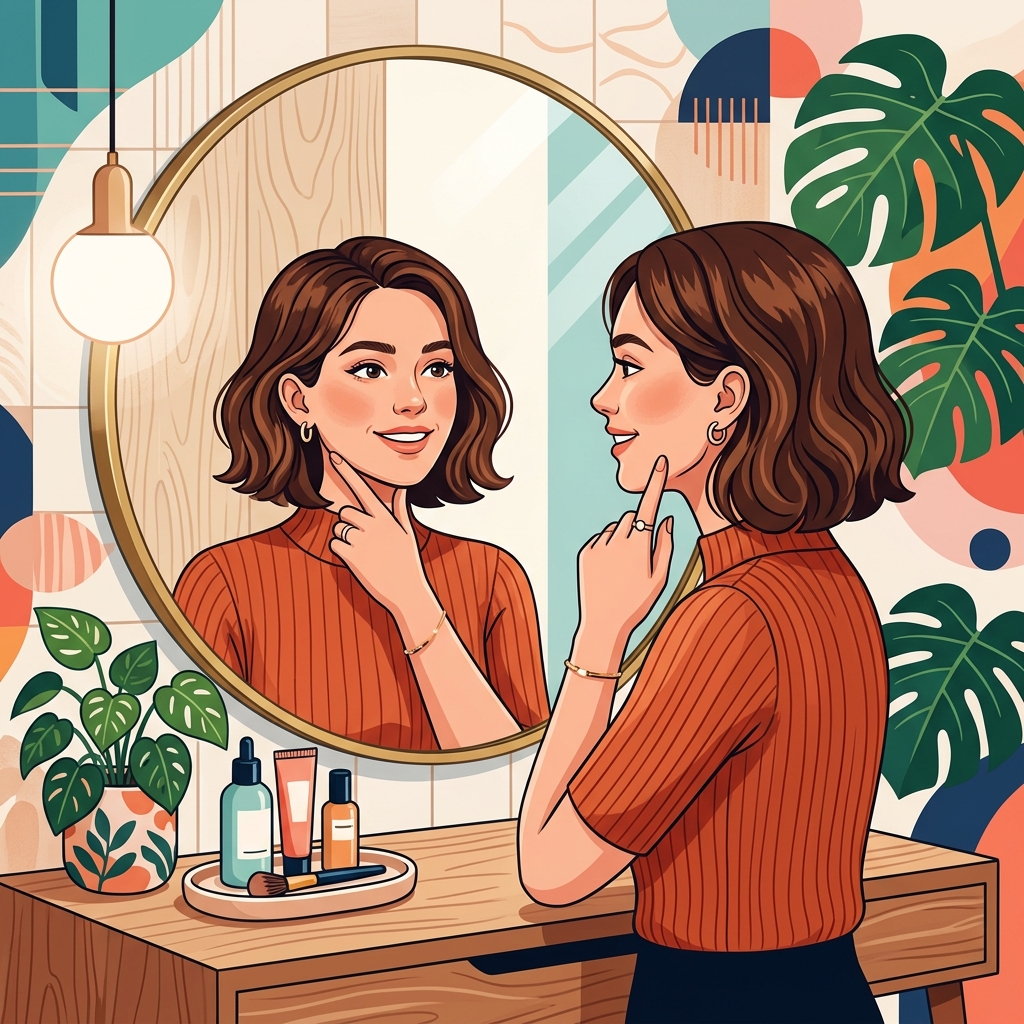
Before we get into the different face shapes, let's talk about how you actually figure out which one you have. The good news? You don't need a stylist or special equipment. All you need is a flexible measuring tape, good lighting, and a mirror.
The 4 Key Measurements You Need to Identify Your Face Shape
There are four primary measurements that determine your face shape. Write these down as you go — you'll compare them at the end to identify your face shape with confidence.
- 1 Forehead Width: Measure across your forehead at its widest point — typically halfway between your hairline and your eyebrows. Keep the tape parallel to the floor for accuracy.
- 2 Cheekbone Width: Start at the pointy part below the outer corner of your eye and measure straight across to the same point on the other side. This is usually the widest part of your face.
- 3 Jawline Width: Place the tape at the tip of your chin and measure to the angle of your jaw (that corner where your jaw turns upward). Double that number to get your total jaw width.
- 4 Face Length: Measure from the center of your hairline straight down to the tip of your chin. This is your total face length measurement.
Figure 1: The 4 essential measurements needed to identify your face shape accurately
Using a Photo to Determine Face Shape
Another popular method is the photo technique. Take a straight-on photo of yourself with your hair pulled back completely — no bangs, no wisps framing your face. You want to see the pure outline of your face. Then trace the outline and compare it to the seven common face shape categories.
Even better — modern AI face shape detection tools can do this analysis automatically from a single uploaded photo. The algorithm scans your facial contours, measures key landmarks, and delivers your face shape result in seconds with impressive accuracy.
The 7 Main Face Shapes Explained
Most facial structure experts and beauty professionals recognize seven primary face shapes. While your face might not fit perfectly into one category — and that's totally normal — you'll likely find one that resonates most with your measurements and overall proportions.
Longer than wide, gently rounded jawline, slightly narrower forehead than cheekbones.
Width and length nearly equal, full cheeks, soft and curved jawline.
Broad forehead, strong angular jawline, similar width measurements throughout.
Wide forehead and cheekbones tapering to a narrow, pointed chin.
Narrow forehead and chin with dramatically wide, high cheekbones as the widest point.
Longer than it is wide with relatively uniform width from forehead to jaw.
Narrow forehead that widens at the jaw, creating a pear-like silhouette.
Figure 2: Visual outline comparison of all 7 face shapes
Oval Face Shape: The Versatile Golden Standard
Let's start with the oval face shape — often called the "ideal" face shape in the beauty industry, and for good reason. If your face length is greater than the width of your cheekbones, and your forehead is slightly wider than your jawline with a gently rounded chin, you likely have an oval face shape.
The oval face shape is incredibly versatile. Most hairstyles, glasses frames, and makeup contouring techniques were literally designed with this shape as the benchmark. If you have an oval face, consider yourself extremely lucky in the styling department — almost everything works for you.
Best Styles for Oval Face Shapes
- Best haircuts for oval faces: Virtually any cut works — pixie, bob, long layers, curtain bangs, and everything in between
- Best glasses frames for oval faces: Any shape complements an oval face shape — from round to rectangular
- Makeup contouring for oval faces: Soft contouring along the temples enhances the natural oval shape
- Beard styles for oval faces: Any length or shape works well with oval facial structure
Oval: balanced, longer than wide
Round: equal width and length
Round Face Shape: Soft, Youthful & Approachable
Round faces are characterized by nearly equal width and length measurements, with full cheeks and a soft, curved jawline. There are no sharp angles here — everything is smooth and circular. If your cheekbone width and face length measurements are close to equal, and your jaw and forehead measurements are similar but slightly smaller, you probably have a round face shape.
People with round face shapes often look younger than their age — those full cheeks are a genuine blessing! The styling goal for round faces is typically to create the illusion of length and definition.
Best Styles for Round Face Shapes
- Best haircuts for round faces: Long layers, side-swept bangs, high buns that add vertical height to the round face
- Avoid for round faces: Blunt bobs at chin length, which can emphasize the roundness of a round face shape
- Best glasses for round faces: Rectangular, angular, or square frames that add definition to a round face
- Makeup contouring for round faces: Contour along the sides; highlight the center forehead and chin to elongate
Square: broad jaw, angular features
Heart: wide top, narrow pointed chin
Square Face Shape: Bold, Strong & Defined
A square face shape features a broad forehead, wide cheekbones, and a strong, angular jawline — with all three measurements being relatively similar. The defining feature is that angular, squared-off jaw. It's a face shape associated with power and confidence, and it photographs incredibly well.
The goal with square face shape styling is usually to soften those strong angles while celebrating the natural definition. You have amazing bone structure — own it completely!
Best Styles for Square Face Shapes
- Best haircuts for square faces: Soft layers, waves, and curls that frame the face; long bobs with soft ends work beautifully
- Avoid for square faces: Blunt cuts with straight lines that mirror the strong square jawline
- Best glasses for square faces: Round, oval, or rimless frames to contrast with angular square face features
- Beard tip for square faces: Rounded beard styles soften the square jawline; avoid straight-lined beards that reinforce the angles
Heart Face Shape: Wide on Top, Narrow Below
The heart face shape — sometimes called the inverted triangle face shape — has a wide forehead and cheekbones that taper down to a narrow, often pointed chin. The widest point of a heart-shaped face is typically at the forehead, making it look like — you guessed it — a heart.
Many people with heart-shaped faces also have a widow's peak (that V-shaped point in the hairline at the center of the forehead), which is one of the defining visual cues of this face shape.
Best Styles for Heart Face Shapes
- Best haircuts for heart faces: Side-swept bangs, medium length with volume at the jaw, chin-length bobs that balance a heart face shape
- Avoid for heart faces: Very short styles that emphasize the wide forehead
- Best glasses for heart faces: Bottom-heavy frames, rimless styles, light-colored frames on top
- Makeup contouring for heart faces: Contour the forehead, use highlighter on the chin to balance the heart face shape
Diamond: striking wide cheekbones
Oblong: elongated, rectangular
Diamond Face Shape: Striking, Rare & High-Fashion
The diamond face shape is one of the rarest and most striking. It features a narrow forehead and chin, with dramatically wide, high cheekbones as the broadest point of the face. The overall effect is angular, edgy, and high-fashion.
If your cheekbone measurement is the largest, your forehead and jaw are narrower and roughly similar in width, and your face is longer than it is wide, you're likely a diamond. Embrace it — diamond face shapes photograph like an absolute dream.
Best Styles for Diamond Face Shapes
- Best haircuts for diamond faces: Styles with volume at the forehead and jaw, like side-swept bangs or chin-length bobs
- Avoid for diamond faces: Center parts that emphasize the narrowness of the forehead in a diamond face shape
- Best glasses for diamond faces: Oval and rimless frames; cat-eye styles that complement the diamond face's cheekbones
- Makeup contouring for diamond faces: Highlight the center forehead to add width; contour cheekbones softly
Oblong Face Shape: Long, Elegant & Refined
An oblong face shape — also called a rectangle face shape or long face shape — is noticeably longer than it is wide, with a relatively uniform width from forehead to jaw. Unlike the oval face shape, the oblong lacks significant curve at the cheeks. Think elegant and refined.
Styling for oblong face shapes is generally focused on adding width and breaking up the length to create a more balanced, proportional appearance across the facial structure.
Best Styles for Oblong Face Shapes
- Best haircuts for oblong faces: Waves, curls, and horizontal elements; blunt bobs; curtain bangs that add width to an oblong face
- Avoid for oblong faces: Long straight styles that add even more length; very high updos that elongate an oblong face shape
- Best glasses for oblong faces: Wide frames, decorative temples, oversized styles that add width
- Makeup tip for oblong faces: Use a lighter highlighter across the cheekbones horizontally to add width to an oblong face
Triangle: pear-shaped, wide jawline
Glasses frames: contrast creates balance
Triangle Face Shape: Narrow Forehead, Wide Jaw
The triangle face shape (sometimes called a pear-shaped face) is essentially the opposite of the heart face shape. It features a narrow forehead that widens at the cheeks and jaw. If your jawline measurement is your widest, and your forehead is noticeably narrower, this is your face shape.
The styling strategy for triangle face shapes is to add width to the upper half of the face while minimizing the wider jaw area.
Best Styles for Triangle Face Shapes
- Best haircuts for triangle faces: Volume at the crown and temples, pixie cuts, structured top knots that balance a triangle face shape
- Avoid for triangle faces: Styles with volume at the bottom that accentuate the wide jawline
- Best glasses for triangle faces: Bold, thick frames on top; aviators; cat-eye styles that work beautifully for triangle face shapes
- Makeup tip for triangle faces: Highlight the forehead and temples; contour along the jaw to minimize width
Face Shape Quick-Reference Comparison Table
Use this handy table to compare all seven face shapes side by side and find the best styling options for your unique facial structure.
| Face Shape | Key Feature | Best Haircut | Best Glasses |
|---|---|---|---|
| Oval Face | Balanced proportions | Any style | Any frame |
| Round Face | Equal width & length | Long layers, side part | Rectangle, square |
| Square Face | Strong angular jaw | Soft waves, layers | Round, oval |
| Heart Face | Wide forehead, pointed chin | Side bangs, bob | Bottom-heavy frames |
| Diamond Face | Wide cheekbones | Volume at forehead/jaw | Oval, rimless |
| Oblong Face | Long, uniform width | Bangs, waves, curls | Wide, oversized |
| Triangle Face | Wide jaw, narrow forehead | Volume at crown | Bold top frames |
Common Mistakes When Identifying Your Face Shape
Here's where people often go wrong when trying to determine their face shape — and these mistakes are more common than you'd think:
- Not pulling hair back fully. Even a few wisps of hair can dramatically distort how you perceive your face outline. Always pull every strand back before assessing your face shape.
- Making decisions based on one feature. Your jawline alone doesn't determine your face shape — you need to look at all four key measurements together.
- Confusing oval with oblong. Both are longer than wide, but the oval face shape has more curve at the jaw and cheeks. The oblong face shape is more uniformly wide throughout.
- Ignoring that faces can be in-between. Real faces don't always fit neatly into one box. You might be oval-leaning-heart or square-leaning-round — that's completely normal.
- Relying only on visual guessing. Measuring gives you actual data. Trust the numbers alongside the mirror — or use an AI face shape detection tool for precision results in seconds.
Face Shape and Makeup: Contouring for Your Facial Structure
One of the most powerful applications of knowing your face shape is in makeup — particularly contouring and highlighting. These techniques use shadows and light to play with how your face's proportions appear. It's basically the makeup equivalent of digital editing, done entirely with powder and cream.
Figure 3: Contour (shadow) and highlight placement by face shape — blue = highlight, green = contour
Universal Contouring Rules for Every Face Shape
Regardless of face shape, contouring follows a simple principle: darker shades recede (minimize areas) and lighter shades advance (emphasize areas). Apply contour where you want to minimize, and highlight where you want to draw attention.
- Oval face contouring: Light contouring along the temples; everything is already balanced with an oval face shape
- Round face contouring: Contour the sides of the face and under cheekbones to create definition in a round face shape
- Square face contouring: Soften the corners of the jaw and forehead with contour for a square face shape
- Heart face contouring: Contour the wide forehead; highlight the pointed chin of a heart face shape
- Diamond face contouring: Highlight the forehead and chin to add visual width at the ends of a diamond face shape
- Oblong face contouring: Contour the forehead and chin; highlight across the cheekbones for an oblong face shape
Choosing Glasses Frames for Your Face Shape
This is probably one of the most practical applications of face shape knowledge. Choosing the wrong glasses frame can make your face look unbalanced or disproportionate. The right frame, on the other hand, becomes like a natural extension of your features.
The general rule: choose glasses frames that contrast with your face shape. Angular face shapes look best with rounded frames, while rounder face shapes look great in rectangular or angular styles. This contrast creates visual balance across your entire facial structure.
Quick Glasses Frame Guide by Face Shape
- Oval Face — Experiment freely; any glasses frame shape and size works beautifully
- Round Face — Rectangular, geometric, or angular frames add definition to a round face
- Square Face — Round, oval, or rimless frames soften the strong square jawline
- Heart Face — Light, rimless, or bottom-heavy styles balance the wider forehead
- Diamond Face — Oval or rimless frames let those striking cheekbones shine
- Oblong Face — Wide frames with decorative temples add width and break up length
- Triangle Face — Bold, heavy-top frames balance a wider jaw
Face Shape for Men: Beard Styles and Haircuts
Face shape isn't just a concern for women — men benefit equally from understanding their facial structure. Whether you're choosing a beard style, a haircut, or both, your face shape is the most important factor in the decision.
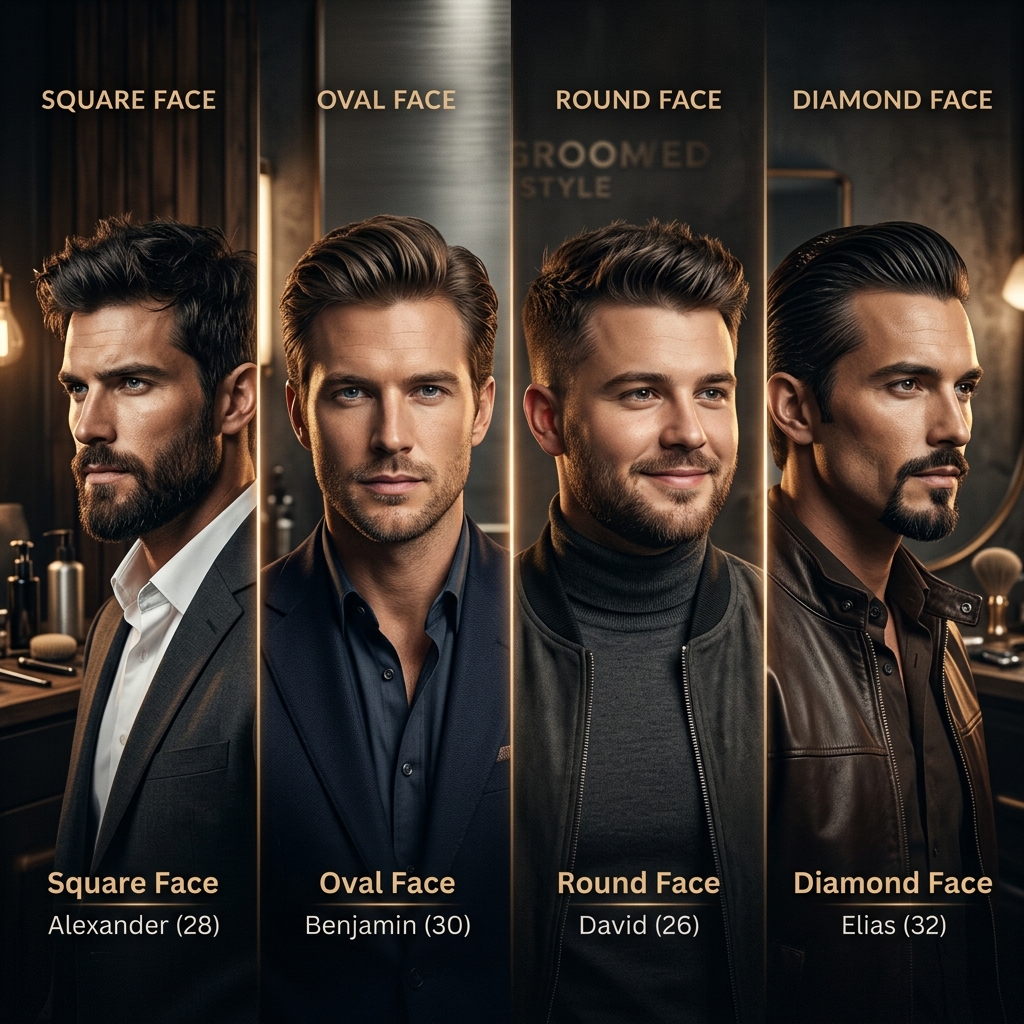
For men with square faces, a rounded beard style (like a circle beard) can soften the jaw, while a textured top adds height. Men with round faces do well with beard styles that add length — a short boxed beard or goatee that elongates the chin works brilliantly. Those with oval faces can pull off almost any beard style, from clean-shaven to a full beard.
A good barber will automatically factor in your face shape — but knowing yours means you can have an informed conversation about what you actually want. And if you're not sure? An AI face shape detector can tell you your shape in seconds before your next barbershop visit.
Conclusion: Know Your Face Shape, Own Your Style
So — which face shape do you have? By now, you should have a pretty clear idea. Whether you're sporting an elegant oval face, a strong square face, a striking diamond face, a charming heart face, or anything in between, the most important thing to remember is this: every face shape has its own unique beauty.
Armed with your measurements and this guide, you can now make smarter decisions about haircuts, glasses frames, makeup contouring, beard styles, and more. Stop letting trial and error dictate your style choices. Work with your face shape, not against it.
And the fastest way to get started? Upload a photo to an AI-powered face shape detector, get your face shape result in seconds, and let this guide do the rest. Your best style decisions start here.
Frequently Asked Questions
10 FAQsPull all your hair back and look straight into a mirror — trace the outline of your face or compare your reflection to the seven common face shapes. Better yet, use an AI-powered face shape detector — just upload a photo and get your face shape result instantly without any manual measuring.
Yes — facial structure can shift slightly with age. As we get older, fat distribution changes, the jawline can soften, and the face may appear slightly rounder or more oblong. Weight changes also affect how your face shape appears, though the underlying bone structure stays the same throughout your life.
The beauty industry has historically described the oval face shape as the "ideal" because most traditional style guidelines were built around it. However, this doesn't mean other face shapes are less attractive — every face shape has unique characteristics that are genuinely beautiful in their own right.
That's completely normal and very common. Real human faces often blend two face shapes — like oval-heart or square-round. In these cases, identify your two closest face shape categories and combine the styling tips from both to find what works best for your unique facial structure.
Absolutely. Your face shape is one of the most important factors a hairstylist considers when recommending a cut. The right haircut can visually balance your facial proportions, enhance your features, and frame your face shape beautifully.
The core principle is contrast — glasses frames that contrast with your face shape create visual balance. Angular face shapes suit rounded frames, and rounder face shapes suit angular frames. Frame size should also be proportionate to your overall facial structure.
The diamond face shape is considered one of the rarest, characterized by dramatically wide cheekbones with a narrow forehead and chin. It's a highly photogenic face shape coveted in the modeling industry. The oblong face shape is also less common compared to oval or round face shapes.
Yes — AI-powered face shape detectors analyze a photo and identify your face shape with impressive accuracy. They scan key facial landmarks and contour points to deliver results in seconds. Combining AI face shape analysis with manual measurements gives you the most reliable answer.
Yes, face shape is central to effective contouring. The placement of highlight and contour products should be tailored to your specific facial structure to create the most flattering, balanced result. Generic contouring tutorials that don't account for face shape often produce unnatural or unflattering results.
They are related but not identical. Face shape refers to the overall silhouette of your face — oval, round, square, etc. Facial structure refers more broadly to your bone structure, including the prominence of your cheekbones, the depth of your eye sockets, the projection of your chin, and the overall 3D architecture of your face.

Anam Ahsan
SEO Expert & Web Strategist
Passionate about helping people discover their best look through innovative AI technology.
As the visionary behind Detect-FaceShape.com, Anam aims to provide an easy-to-use, highly accurate tool that empowers individuals to confidently choose hairstyles, eyewear, and grooming styles tailored to their unique facial structure.
Latest Articles
Discover tips, guides, and insights about face shapes.