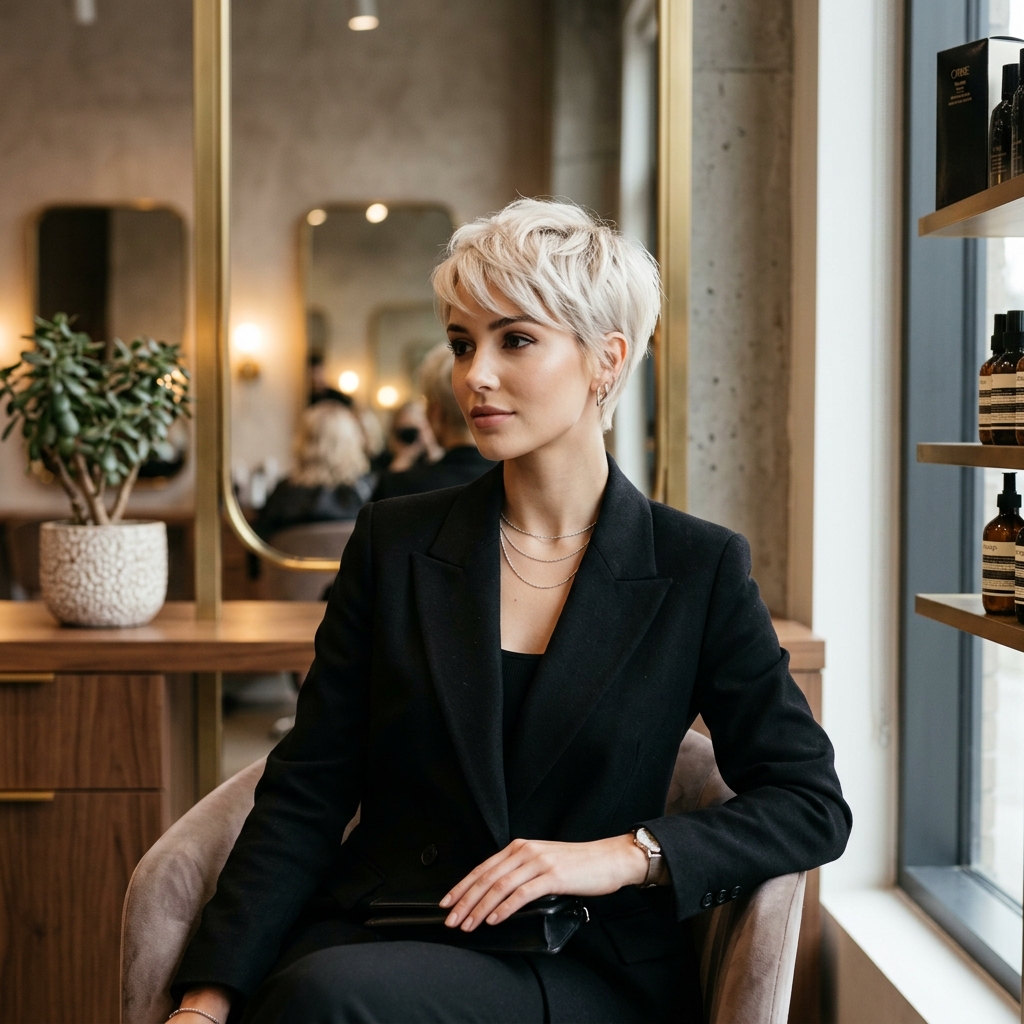
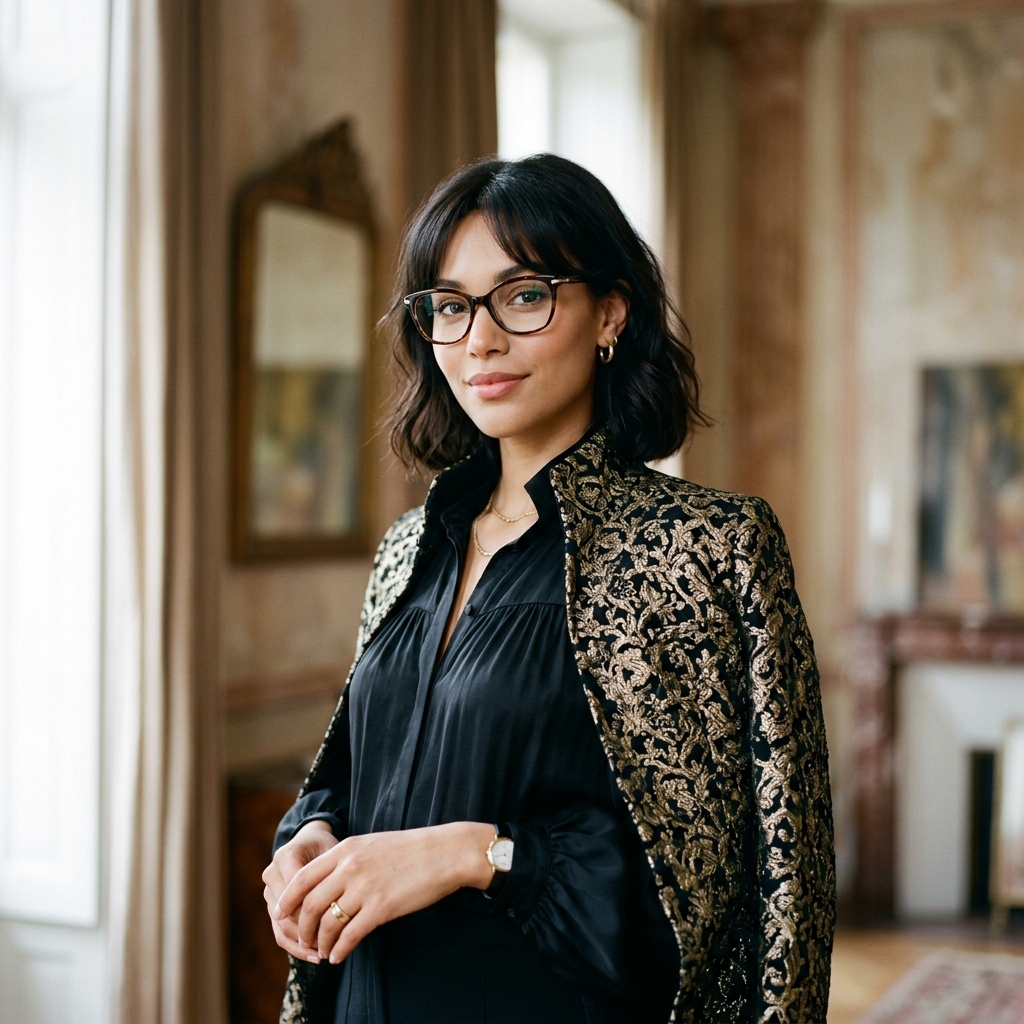
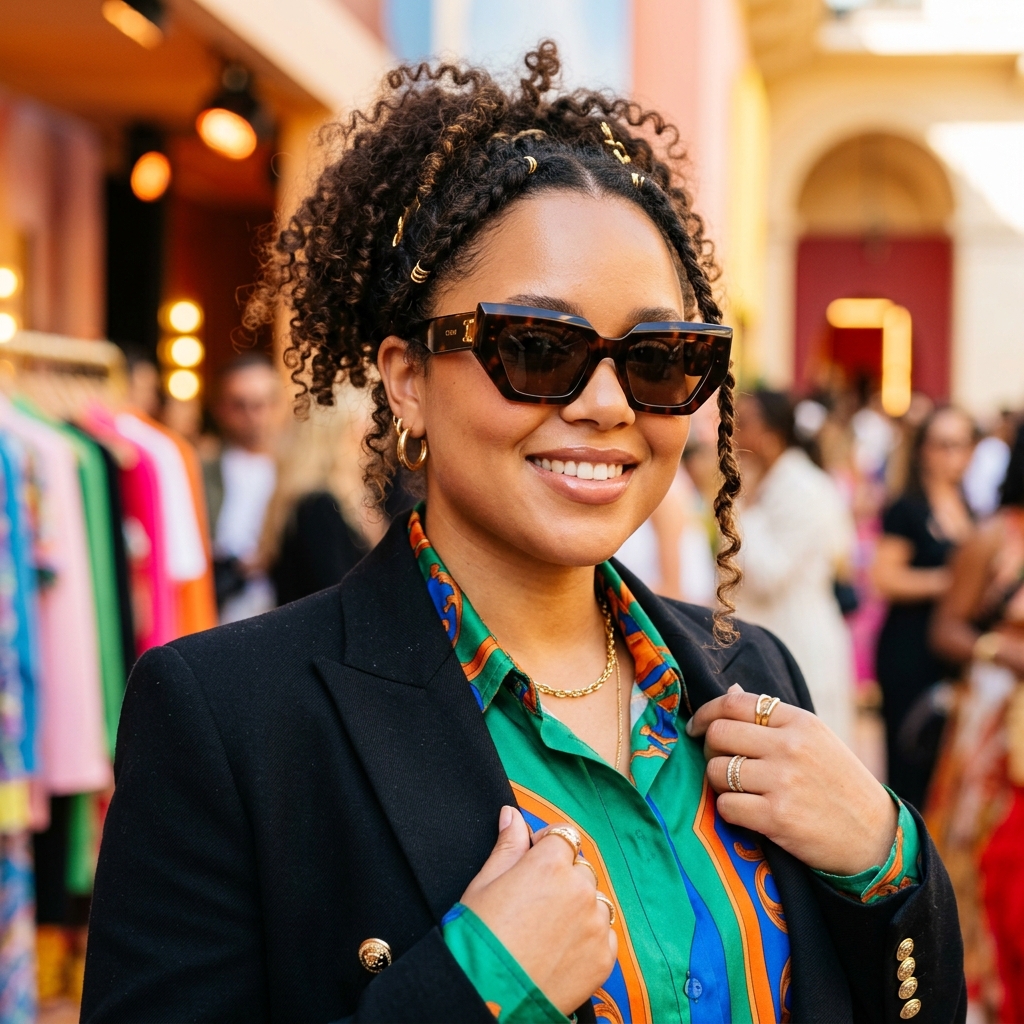
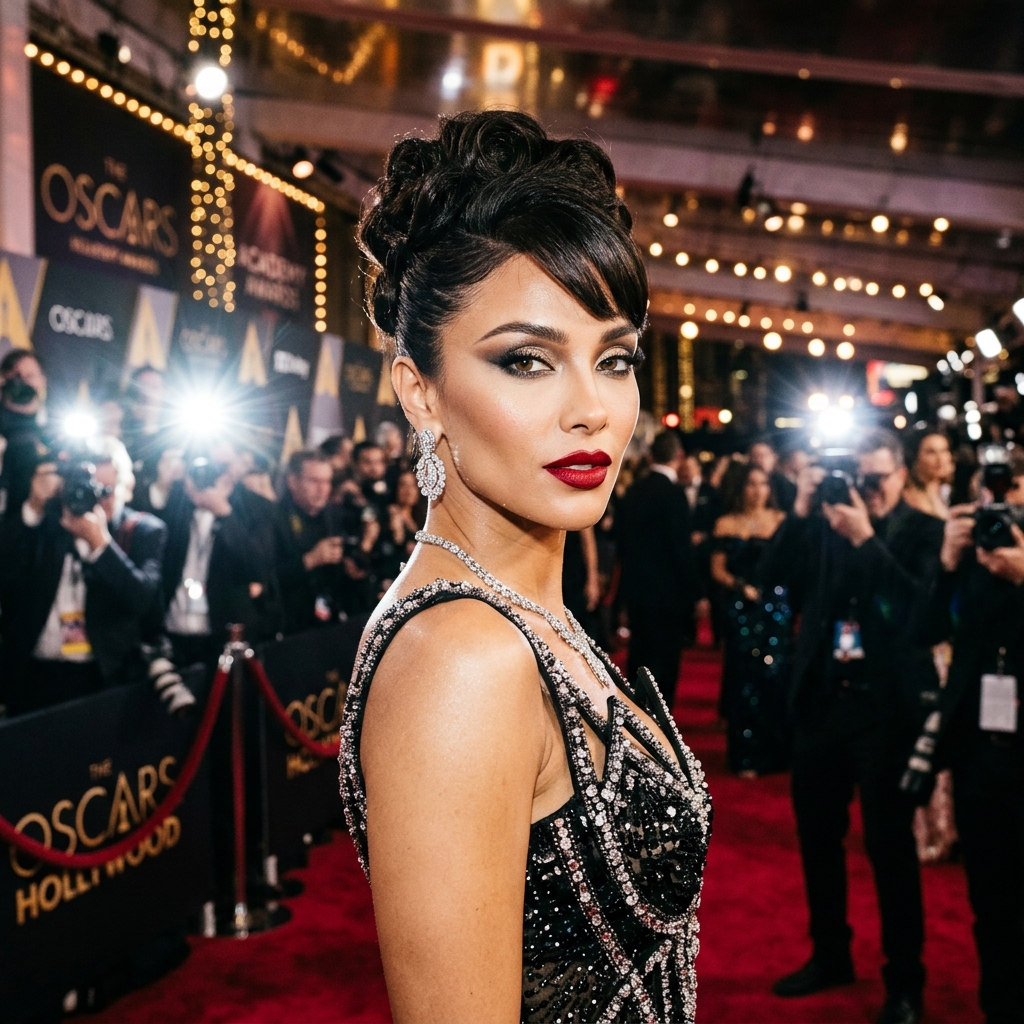
Face Shape and Haircut:
Find Your Perfect Cut
The complete guide to choosing the right haircut for your face shape — with expert recommendations for all 7 shapes, men and women, every length and texture.
Best Haircut for Every Face Shape
Tap any face shape to see the best haircut recommendations instantly
A great haircut isn't just about what's trending on Instagram — it's about what works with the face it's sitting on. The single biggest factor in whether a haircut flatters you is your face shape. Once you understand your shape and the principles behind haircut selection, every salon visit becomes more intentional, every style decision more confident, and every result more genuinely beautiful. This is the complete guide.
Your face shape is the permanent foundation beneath every haircut you'll ever have. It doesn't change with seasons, trends, or hair colour — it's defined by your bone structure, and it's the single most important variable in how a haircut will look once it's on your head. Understanding the relationship between face shape and haircut is what separates people who always look great leaving the salon from those who walk out slightly disappointed.
In this complete guide, we cover all 7 face shapes — oval, round, square, heart, diamond, oblong, and triangle — with specific haircut recommendations and clear guidance on what to avoid for each shape. We also cover bangs, men's haircuts by face shape, and how to communicate your needs clearly to your stylist.
Why Face Shape Is the Most Important Factor in Choosing a Haircut
Before we get into specific recommendations, it's worth understanding why your face shape matters so much for haircut selection — because once you understand the underlying logic, you can apply it to any style decision, even ones not covered in this guide.
The principle is visual balance. Every face has proportions — the relationship between its width and length, the strength of the jaw, the prominence of the cheekbones, the height of the forehead. A well-chosen haircut uses volume, length, and structure to create the visual impression of a balanced, proportional face. A poorly chosen one does the opposite — drawing attention to features you'd rather minimise, or working against your natural structure instead of with it.
Think of it this way: your stylist is working with the same principle every time, whether they articulate it or not. The haircut they suggest is shaped by the face shape in front of them. When you understand those principles yourself, you become a better partner in the process — and you end up with better results.
Don't Know Your Face Shape Yet? Use our AI-powered face shape detector — upload a front-facing photo with your hair pulled back and get your face shape identified in seconds. Then come back here for your personalised haircut guide.
The Core Principles: Face Shape and Haircut Logic
Every face shape haircut recommendation in this guide is built on these foundational principles. Understanding them means you can apply the logic to any new style you come across:
- Add height for wide faces: Round and square faces benefit from haircuts that create vertical volume — high buns, layers that add height at the crown, upswept styles. This elongates the face visually.
- Add width for long faces: Oblong and long faces need horizontal elements — blunt bangs, waves and curls that expand outward, shoulder-level volume. This makes the face appear shorter and wider.
- Add softness for angular faces: Square and triangle faces have strong lines that benefit from flowing, curved, and textured haircuts — soft waves, layered movement, and styles that introduce curves.
- Add structure for soft faces: Round faces, which lack angular definition, often benefit from structured, defined haircuts rather than very soft, fluffy styles that blend into the face's own softness.
- Frame strategically: The way a haircut frames the face — which parts it covers, which it reveals — is as important as the cut itself. Side-swept bangs change the apparent shape of the forehead. Hair that falls past the jaw changes how the jaw reads.
Oval Face
Any haircut, length, or texture works. Choose based purely on preference.
Round Face
Long layers, side bangs, high updos — anything that elongates the face.
Square Face
Soft waves, curtain bangs, layered movement — introduce curves to balance the jaw.
Heart Face
Chin-length bobs, side-swept bangs, volume at jaw level.
Diamond Face
Curtain bangs, chin-length bobs, volume at crown and jaw.
Oblong Face
Blunt bangs, waves and curls, shoulder-level volume.
Triangle Face
Volume at the top and crown, A-line bobs, side-swept bangs.
Best Haircuts for Oval Face Shape
If you have an oval face shape — slightly longer than wide, with gently rounded edges and a softly tapered jaw — you've drawn the golden ticket of haircut freedom. The oval face is the most versatile face shape precisely because its balanced proportions are compatible with virtually every cut, length, and style imaginable. Your job is simply to choose what you love.
- Pixie cut — ultra-short styles that overwhelm other face shapes look stunning on oval
- Bob at any length — chin, collarbone, or lob, blunt or layered, all work equally
- Long layers — flowing layers complement the natural balance of an oval face
- Beachy waves — relaxed texture suits oval proportions naturally
- Blunt cut — the clean geometric line looks polished and intentional
- Curtain bangs — frame the face beautifully without disrupting balance
- Any updo — both high buns and low chignons work perfectly
- Very wide, flat styles that add extreme horizontal volume can slightly over-balance an oval face — but this is a minor concern
- Heavy blunt bangs cut very low can make the forehead appear shorter
- Otherwise — almost any direction works. Choose what you love
The key insight for oval face haircuts: stop limiting yourself. Many people with oval faces have been told "your face shape suits everything" and interpret it as generic advice. It isn't. It's genuinely true — your bone structure creates a foundation that works with virtually every cut. Walk into your salon with exactly what you want and ask for it without hesitation.
Best Haircuts for Round Face Shape
A round face has nearly equal width and length, with full rounded cheeks and a very soft jawline. The haircut goal is clear: add vertical height and visual length. The right haircut makes a round face appear slimmer, more defined, and more elongated. The wrong one can make it appear even wider and rounder.
- Long layers past the shoulders — length creates the illusion of a slimmer face
- Side-swept bangs — the diagonal creates visual length and breaks roundness
- High bun or top knot — adds significant vertical height above the face
- Lob (long bob) — must sit below the jaw to add length without adding width
- Curtain bangs — the parted style elongates the forehead on a round face
- Layered pixie with height — volume at the crown compensates for short length
- Centre-part long styles — draws the eye vertically down the face
- Chin-length blunt bob — ends at the widest point, emphasising width
- Full heavy blunt bangs — shortens the face vertically
- Very short flat crops — no height means no vertical elongation
- Voluminous curls at the sides — adds width where a round face needs it least
- One-length blunt styles at jaw — creates a horizontal line at the widest point
Chin-length blunt bob ends at the widest point of a round face
Long layers with side-swept bangs elongate a round face
Best Haircuts for Square Face Shape
A square face features a broad forehead, strong cheekbones, and an angular, defined jawline — with all three widths roughly equal. The haircut goal is to soften those angular lines with curved, flowing styles that introduce movement and reduce the geometric sharpness of the jaw. The strong bone structure of a square face is a genuine asset — it just needs the right framing.
- Soft waves and natural curls — introduce the curves that contrast with angular jaw
- Long layers with movement — flowing layers frame and draw the eye away from the jaw
- Side-parted styles — the diagonal breaks the symmetry of the strong square structure
- Lob with soft, textured ends — chin-to-collarbone with rounded ends flatters a square face
- Curtain bangs — soften the forehead and draw attention inward
- Textured, layered pixie — soft movement suits square faces better than blunt crops
- Wispy, side-swept fringe — adds softness above the strong brow line
- Blunt jaw-length bob — creates a perfect visual box around the square jaw
- Slicked-back styles — expose every angle of the square face
- Harsh centre parts — reinforce the symmetry and geometry of the square jaw
- Very short flat crops — no movement at the sides leaves the face looking boxy
Best Haircuts for Heart Face Shape
The heart face shape — wide forehead and cheekbones tapering to a narrow, pointed chin — needs haircuts that minimise the wide upper face and add volume at the jaw level. The goal is to balance the top-heavy proportions by drawing visual weight downward.
- Chin-length bob with volume at ends — adds visual width exactly where a heart face needs it
- Side-swept bangs — cover part of the wide forehead and create a flattering diagonal
- Lob with flared or textured ends — ends that add volume at jaw level balance the wide top
- Medium layers gaining volume below the ears — balances the heart-shaped face beautifully
- Half-up half-down styles — keeps volume at lower half while framing the forehead
- Wispy fringe — light, airy bangs reduce visual emphasis on the wide forehead
- Very short crops with no jaw volume — leave the wide forehead unbalanced
- High voluminous updos — add height to an already top-heavy face
- Heavy blunt bangs — emphasise the width of the forehead
- Very sleek, flat sides — create an exaggerated inverted triangle effect
Best Haircuts for Diamond Face Shape
The diamond face shape — the rarest of all — features a narrow forehead, dramatically wide cheekbones, and a narrow chin. The haircut goal is to add visual width at the forehead and chin while keeping the already-prominent cheekbones relatively understated.
- Curtain bangs — add significant visual width to the narrow forehead
- Side-swept bangs — volume sweeping across the forehead broadens the narrow top
- Chin-length bob with volume — adds width at the chin to balance the narrow lower face
- Short textured styles with volume at crown — adds width where a diamond face needs it most
- Half-up styles — keep the upper section visible to help balance the diamond proportions
- Layered lob with soft ends — chin-level volume balances both top and bottom
- Volume at the cheekbones — wide styles at ear level make already-prominent cheekbones even wider
- Slicked-back styles — expose the narrow forehead fully
- Centre parts with flat sides — emphasise the widest point without balancing top or bottom
Best Haircuts for Oblong Face Shape
The oblong face shape — noticeably longer than wide, with relatively uniform width from forehead to jaw — needs haircuts that add horizontal width and break up the vertical length. Think across, not up.
- Blunt bangs — cuts the face horizontally and dramatically reduces apparent length
- Waves and curls with side volume — textured styles that move outward add the width needed
- Shoulder-length styles with side volume — hair that billows out at the sides
- Layered bob — chin-to-shoulder bob with volume adds horizontal breadth
- Curtain bangs — break up the forehead length and add softness
- Bixie (between bob and pixie) — textured, full bixie with volume at the sides
- Very long straight styles — add even more length to an already long face
- Tall voluminous updos — add height and elongate the face further
- Centre parts with flat, straight hair — draw the eye up and down the full length
Best Haircuts for Triangle Face Shape
The triangle face shape — narrow forehead widening to broad cheekbones and a wider jawline — needs haircuts that add visual volume and width to the upper half of the face while minimising the apparent width of the jaw.
- Crown volume styles — volume above the temples adds width where a triangle face needs it
- Pixie with a full, textured top — crown volume balances a triangle face shape perfectly
- High structured bun — adds significant visual weight above the wide jaw
- Side-swept bangs — add horizontal breadth to the narrow forehead
- A-line bob — shorter at the back, longer at the front, subtly frames without adding jaw width
- Layered styles with volume at crown — keep volume high and flat at the jaw
- Volume at the jaw and cheeks — styles puffing out at ear level make the jaw even wider
- Flipped-out ends — ends curling outward at the chin add width where it's least needed
- Very flat, slicked-down tops — no crown volume leaves the forehead looking even narrower
Bangs and Face Shape: The Complete Fringe Guide
Bangs deserve their own section because they're one of the most transformative elements of any haircut — and one of the most face-shape-dependent. The right fringe can elongate a round face, soften a square face, or balance a heart face. The wrong one does the opposite.
Blunt Bangs by Face Shape
Best for: Oblong and long faces — blunt bangs cut the face horizontally and are the single most effective technique for reducing apparent face length. Also lovely on oval faces.
Avoid for: Round faces — full blunt bangs shorten the face vertically, making a round face look even rounder and wider.
Curtain Bangs by Face Shape
Best for: Nearly universally flattering — oval, diamond, oblong, and square faces particularly benefit. The soft centre-parted shape adds width at the forehead (great for diamond faces) while keeping a light, airy feel (great for square faces).
Avoid for: Not strongly contraindicated for any shape, but on very round faces, curtain bangs should be kept longer so they don't create too much forehead coverage.
Side-Swept Bangs by Face Shape
Best for: Round and heart faces — the diagonal line creates visual length and draws the eye away from the width. One of the most reliable bangs styles for difficult face shapes.
Avoid for: No strong contraindications, though on oval faces, any bang style works equally well.
Micro / Baby Bangs by Face Shape
Best for: Oval and heart faces — showing the full forehead works when you want to minimise chin focus (heart faces) or simply enjoy maximum freedom (oval faces).
Avoid for: Round and oblong faces — micro bangs reveal the full forehead and can make round faces appear wider and oblong faces appear longer.
Men's Haircuts by Face Shape
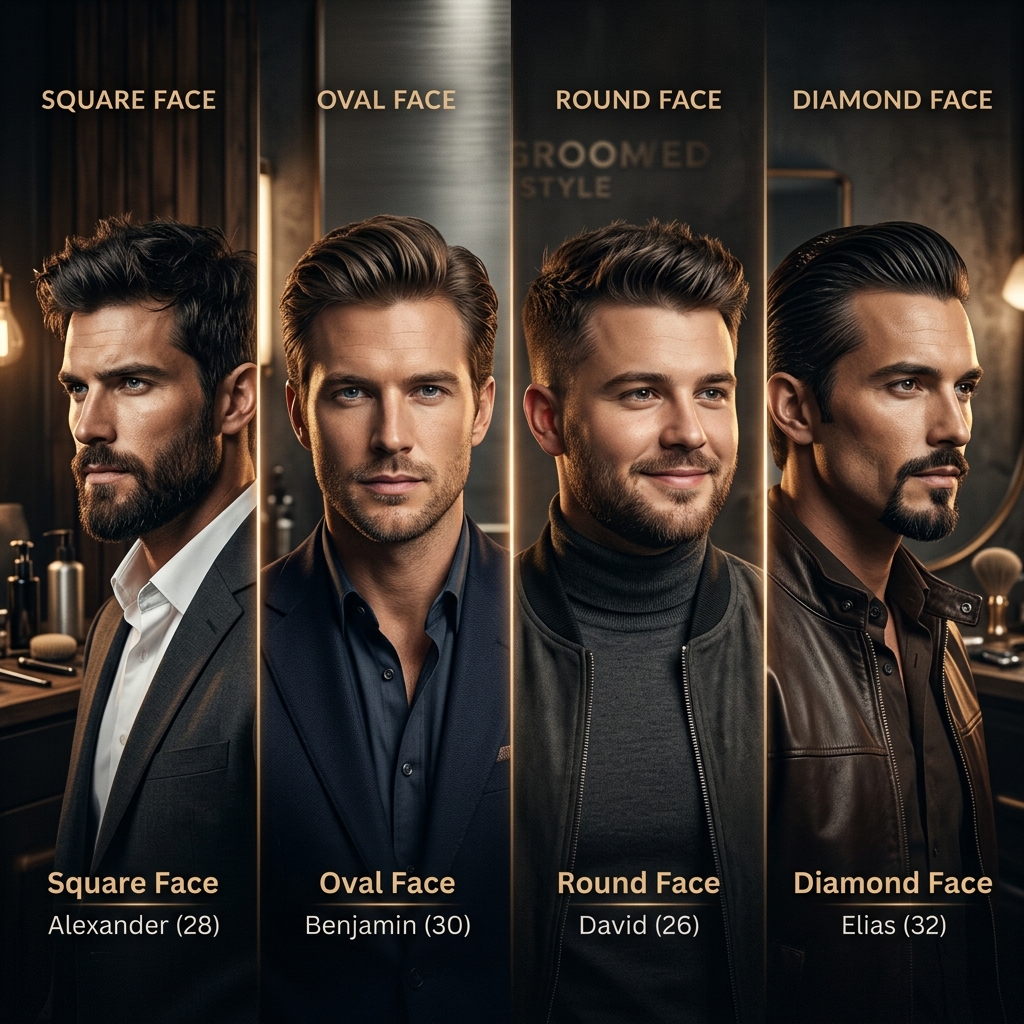
The same face shape principles apply equally to men's haircuts — the specific cuts differ, but the underlying goals are identical. Here's a quick guide to the best men's cuts for each face shape:
- Oval: Side part, crew cut, textured crop, slicked back — virtually anything works
- Round: Quiff, pompadour, or fade with height on top to add vertical elongation
- Square: Textured crop, messy fringe, curtain bangs — soft movement softens the jaw
- Heart: Undercut or fade with tighter sides to balance the wide forehead
- Diamond: Buzz cut or short structured crop with slight top volume
- Oblong: Curtain bangs or fringe to add horizontal width to a long face
- Triangle: Faux hawk, quiff, or volume at the crown to balance the wide jaw
Complete Face Shape Haircut Comparison Table
| Face Shape | Haircut Goal | Best Cuts | Best Bangs | Avoid |
|---|---|---|---|---|
| Oval | Total freedom | Any style — pixie, bob, lob, long, blunt | Any bang type | Extremely wide flat styles |
| Round | Add vertical height | Long layers, side-swept, high bun, lob | Side-swept, curtain | Chin-length blunt bob, full bangs |
| Square | Soften angles | Soft waves, layered lob, curtain bangs | Curtain, wispy | Jaw-length blunt bob, slicked back |
| Heart | Balance wide forehead | Chin-length bob with volume, lob | Side-swept, wispy | High updos, heavy blunt bangs |
| Diamond | Widen forehead & chin | Curtain bangs, chin bob, textured styles | Curtain, side-swept | Volume at cheekbones, slicked back |
| Oblong | Add horizontal width | Blunt bangs, waves, curls, layered bob | Blunt, curtain | Long straight styles, high updos |
| Triangle | Add crown volume | Crown volume styles, A-line bob, pixie | Side-swept | Volume at jaw, flipped-out ends |
How to Talk to Your Stylist About Your Face Shape
Knowing your face shape and the right haircut principles transforms your salon experience. Here's how to communicate clearly and get the result you want:
- 1Tell them your face shape. Say "I have a round face shape" — this immediately signals to a good stylist what direction to take. They think about face shapes instinctively; you speaking the language helps them help you faster.
- 2Bring reference photos of faces like yours. Not just the final style you want — find photos of people with a similar face shape wearing that haircut. This gives your stylist context for how the cut will actually behave on your specific proportions.
- 3Ask specifically about your face shape. "Given my face shape, how would you adjust this cut to make it most flattering?" A good stylist will always factor your facial structure in — this question invites them to share that knowledge explicitly.
- 4Be specific about length and bangs. "Leave about two inches on top" is clearer than "a bit shorter." Specify whether you want blunt, curtain, side-swept, or no bangs. Bang decisions are some of the most face-shape-specific choices in a haircut.
- 5Trust your stylist's modifications. If they suggest a slight adjustment — moving the bang angle, adjusting the length at the jaw — that adjustment is probably based on their trained observation of your face shape. Listen before dismissing.
Conclusion: Let Your Face Shape Guide Every Haircut
The relationship between face shape and haircut is the foundation of flattering style. Once you know your shape — whether it's oval, round, square, heart, diamond, oblong, or triangle — and the core principle it calls for, every haircut decision becomes more confident and more intentional.
For oval faces, that means embracing total freedom. For round faces, it means reaching for length and height. For square faces, it means welcoming soft movement and curves. For heart faces, it means balancing down. For diamond faces, it means widening the narrow points. For oblong faces, it means thinking horizontally. And for triangle faces, it means building volume at the crown.
Know your shape, apply the principle, and walk out of every salon appointment feeling genuinely, confidently great. Start by identifying your face shape with our AI-powered detector — it takes seconds and gives you the knowledge you need for every haircut from here on.
Frequently Asked Questions
10 FAQsThe oval face shape is the most compatible with all haircuts — virtually any length, cut, texture, or style works with the balanced proportions of an oval face. This is because the oval has no extreme feature that needs counterbalancing, giving stylists total creative freedom. If you have an oval face, your only job is to choose what you genuinely love.
For a round face, long layers past the shoulders are the single most effective haircut for creating a slimmer appearance — the length draws the eye vertically and creates the illusion of a longer, narrower face. Side-swept bangs are a close second, as the diagonal line creates visual length and breaks the circular roundness. Avoid chin-length blunt bobs, which end exactly at the widest point of a round face and emphasise its width.
For a square face or square jawline, soft waves and long layers are the best choice. The natural movement of waves introduces curves that contrast with the angular jaw, softening the overall appearance without hiding the strong bone structure. Curtain bangs are also excellent — they soften the forehead zone. Avoid jaw-length blunt bobs, which create a perfect visual frame around the square jaw and emphasise its angularity.
Curtain bangs are one of the most universally flattering fringe styles — they work well for oval, diamond, oblong, and square face shapes particularly. They can work on round faces too, but should be kept longer so they don't create too much forehead coverage, which shortens the face. The soft, parted shape means they don't add the horizontal weight that full blunt bangs do, making them versatile across most face shapes.
The best haircut for a heart-shaped face is a chin-length bob with volume or texture at the ends. This style adds visual width at jaw level — exactly where a heart face is narrowest — creating balance with the wider forehead. A lob (long bob) with flared or textured ends achieves the same effect at a slightly longer length. Side-swept bangs that partially cover the wide forehead are also highly effective for a heart face.
Whether you should get bangs depends on both your face shape and the bang style. Blunt bangs are ideal for oblong faces (they shorten apparent length) but should be avoided on round faces. Side-swept bangs suit round and heart faces particularly well. Curtain bangs are the most universally flattering option across nearly all face shapes. If you have an oval face, any bang style works — it's entirely a matter of personal preference.
Yes — short hair can work on a round face, but it needs to be approached carefully. The key is ensuring the cut has height at the crown to compensate for the lost length. A pixie cut with a voluminous, textured top can look stunning on a round face. Avoid very flat, short crops with no height, as these leave the full width of the round face exposed with no vertical counterbalance. With the right cut, short hair on a round face can be genuinely striking.
For an oblong or long face, blunt bangs are the most powerful single haircut element — they cut the face horizontally and dramatically reduce the apparent face length. Beyond bangs, waves and curls that move outward to the sides add the horizontal width that an oblong face needs. Avoid very long straight styles and high updos, which both elongate the face further. The goal is always to add width and break up the vertical length.
The fastest method is using our AI face shape detector — upload a front-facing photo with your hair pulled back, in even lighting, and get your face shape result in seconds. For a manual method, pull your hair back and take four measurements: forehead width, cheekbone width, jaw width, and face length. Compare these numbers to the criteria for each face shape. The combination of AI detection plus manual confirmation gives the most reliable result.
Both matter significantly, but they work at different levels. Your face shape determines which cuts and proportions will be most flattering — it sets the strategic direction. Your hair texture determines which specific styles within that direction are actually achievable with your natural hair. For example, a round face needs long layers — but whether those layers are straight, wavy, or curly depends on your texture. Ideally, choose a cut that flatters your face shape and is achievable with your natural texture, minimising the daily effort required to maintain it.
Anam Ahsan
SEO Expert & Web Strategist
Passionate about helping people discover their best look through innovative AI technology.
As the visionary behind Detect-FaceShape.com, Anam aims to provide an easy-to-use, highly accurate tool that empowers individuals to confidently choose hairstyles, eyewear, and grooming styles tailored to their unique facial structure.
Latest Articles
Discover tips, guides, and insights about face shapes.